About Us
Our History and Achievements Through the Years
Founded in 1973 and based in south-central Paraná and northern Santa Catarina, Remasa has built its business around growing high-quality forests to serve the forest products industry in Brazil and abroad.
Over the past decade, Remasa has attracted new investment and expanded its acquisition of existing forest assets, becoming one of Brazil’s largest independent pine log producers, with annual production capacity of 600,000 metric tons of timber. We are a professionally managed company led by an executive leadership team focused on corporate governance best practices. We consider compliance and accountability fundamental pillars of our organization and undergo ongoing audits by Big Four firms.

Our Mission
To produce high-quality timber for a wide range of uses, meeting demand from the forest products industry in Brazil and around the world while remaining committed to economic sustainability and environmental and social responsibility.
Our Values
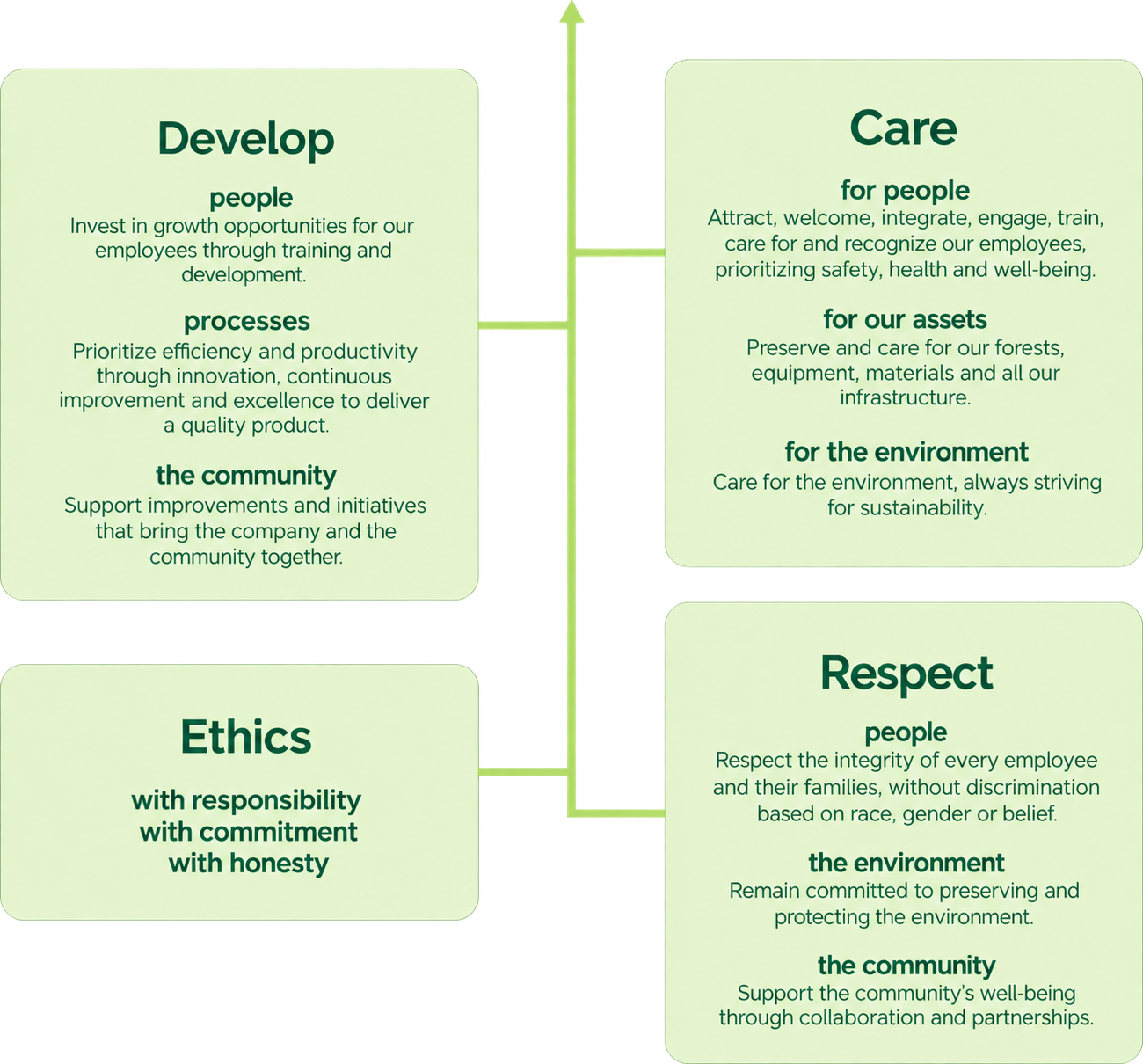
Our Vision
Safety
Innovation
Environmental Preservation
A Great Place to Work
Our People Are Our Greatest Asset
Remasa’s greatest assets are its employees and its ability to connect with society.
As a responsible corporate citizen, we put social responsibility into practice through programs that improve employees’ quality of life and through our involvement in local communities, sharing new values and a new vision for the future.
Remasa ensures that work at every location under its responsibility complies with applicable occupational health and safety requirements. We require the same of contractors working at our facilities.
Our forest management unit fully complies with NR-31, Brazil’s occupational health and safety regulation for agriculture, livestock farming, silviculture, forestry and aquaculture, as well as our internal health and safety procedures. Worksites undergo monthly safety inspections.
Under our Health and Safety Management Program, leaders provide operational teams with pre-operation instructions and weekly safety talks on relevant worker health and safety topics to support team development.
Our People Management team works to attract, welcome, integrate, engage, develop, care for and recognize our employees. We prioritize their safety, health, well-being and quality of life, helping each person feel valued as an individual.

Our History and Achievements Through the Years
1973 | Our Beginnings

Founded by the Gugelmin Group to consolidate reforestation areas established through tax incentives.
2000 | 4,000 Hectares

Remasa’s planted area reaches approximately 4,000 hectares.
2011 | FSC® Certification

Remasa earns FSC® certification.
2012 | New Investment

Remasa attracts new investment and expands its acquisition of forest assets.
2015 | Consolidation

We complete the integration and consolidation of operations across our various assets.
2016 | FSC® Recertification

Remasa earns FSC® recertification for another 5 years.
2019 | First GPTW Certification

Remasa earns GPTW® certification, gaining recognition as a great place to work.
2020 | Among Paraná’s Top 5 Companies

GPTW® names Remasa the 2nd best company in agribusiness, the 4th best company in Paraná and the 13th best company to work for in Brazil.
2021 | Our People Are Our Greatest Asset

GPTW® names Remasa the 2nd best company in agribusiness, the 7th best company in Paraná and the 25th best company to work for in Brazil.
2022 | Moving Up the GPTW Rankings

GPTW® names Remasa the 3rd best company in agribusiness, the 5th best company in Paraná and the 14th best company to work for in Brazil.
2023 | The Best Company in Paraná

GPTW® names Remasa the best company to work for in agribusiness in Brazil.
2025 | Renewed Commitment to FSC®

Remasa earns FSC® recertification for another 5 years.
Our Production
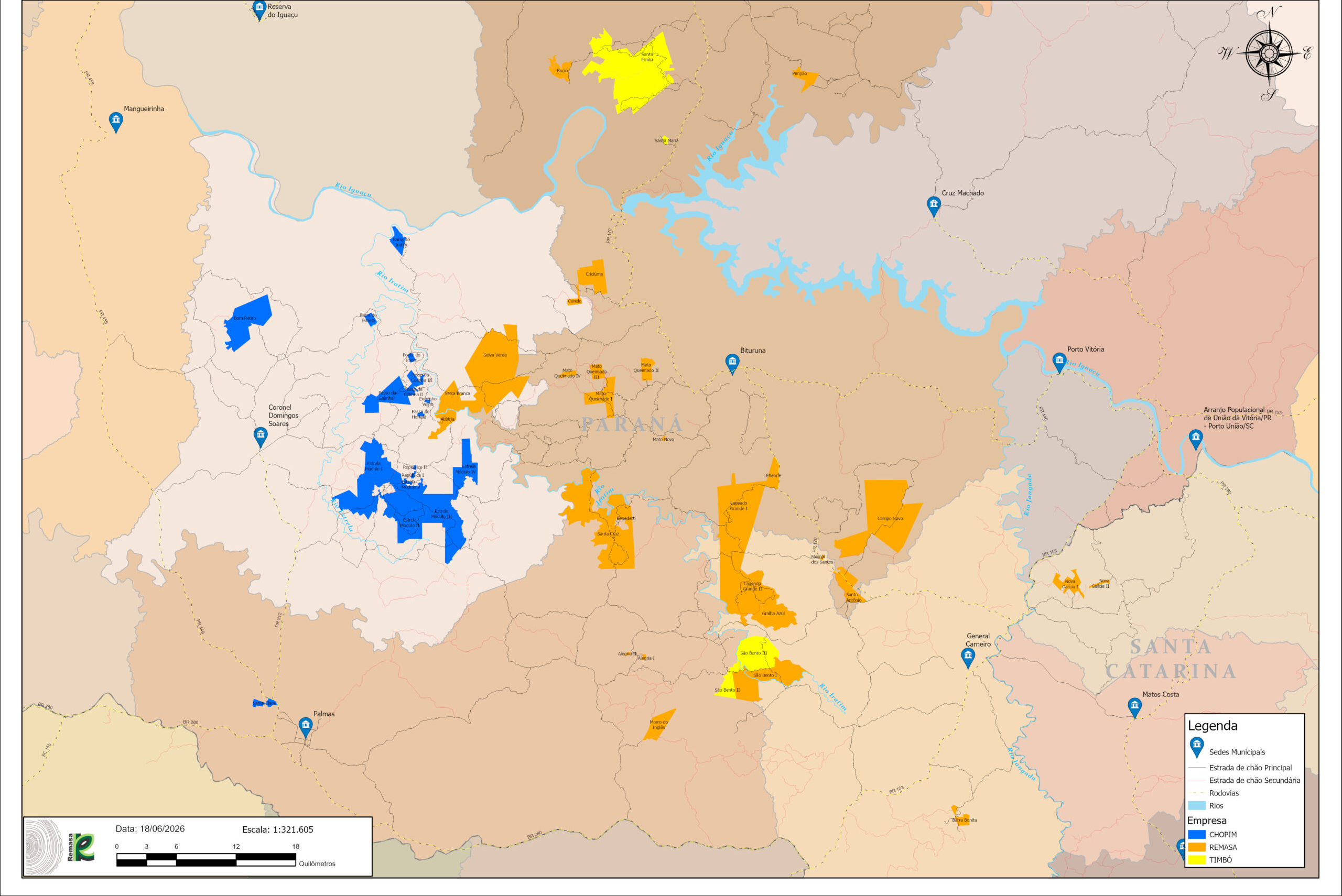
Our forests are located in south-central Paraná and northern Santa Catarina, a region with some of the world’s highest pine productivity and an established planted forest market.
Farm Distribution Map
Our Brand Is Present in Every Product and Service
Assuring our customers that the products they purchase come from an environmentally sound, socially beneficial and economically viable production process, and meet the required quality standards.